Plant care
Overwatered or Underwatered? Signs & What to Check
Overwatered or underwatered? A wilted leaf alone cannot tell you. Before adding water, check the potting mix, drainage and recent changes around the plant. Similar symptoms can have different causes, including root problems, light and pests. UC IPM explains these overlapping symptoms.
Start with what you can observe
Put the watering can down for a moment. Write down the plant’s identity if you know it, when it was last watered and whether it recently moved. “I don’t know” is a useful answer: it tells you which evidence to gather next.
Check below the dry-looking surface of the mix without damaging roots. Compare the pot’s weight with what you remember after watering. Look for a drainage hole and check whether the inner pot is standing in water inside a decorative cover. Pot material and growing medium affect drying: unglazed terracotta generally dries faster than nonporous containers. Virginia Tech’s container-watering guide explains why one schedule cannot fit every pot.
Do not turn a finger-depth rule into a universal instruction. Find the moisture requirements of your particular plant; a moisture-loving plant and an arid-adapted succulent need different decisions.
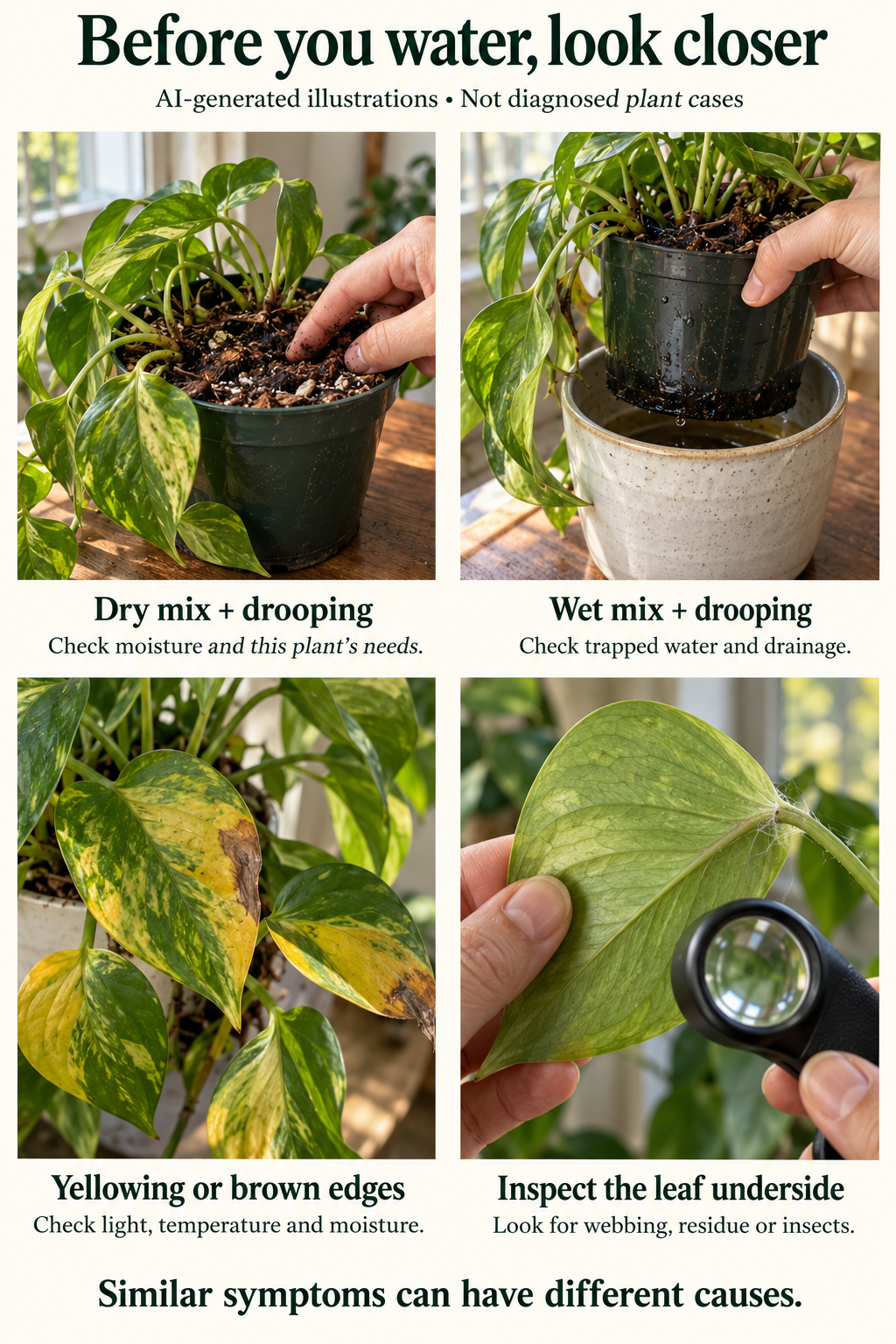
AI-generated, photo-style illustrations—not photographs of tested or diagnosed plants. Check the real plant and pot; similar leaves can have different causes. Pothos can naturally have yellow variegation: look for changes from its usual appearance, not yellow coloring alone. Moisture must be checked in person, not inferred from the image.
Use this observation table before choosing an action
This is an observation aid, not a diagnosis or a validated scoring tool.
| What you observe | What to check next | What not to conclude |
|---|---|---|
| Wilted leaves and dry mix | Does this plant need watering at this degree of dryness? Is water reaching the root ball? | Every wilted plant needs water. |
| Wilted leaves and wet mix | Standing water, drainage, recent watering and root condition if safely accessible | More water will revive it. |
| Yellow leaves with unclear moisture | Light, temperature changes, pests and the pattern of affected leaves | Yellow means a fertilizer shortage. |
| Brown edges or patches | Where damage occurs and what changed before it appeared | Brown edges prove underwatering. |
| Sticky residue, webbing or visible insects | Leaf undersides, stems and an appropriate pest identification reference | Every mark needs a pesticide. |
The symptom alternatives come from UC IPM’s houseplant problem guide; the order of checks is our editorial framework.
If the mix is dry
When the plant’s requirements and moisture check indicate watering, wet the root zone using a method appropriate to that plant and let excess water drain. Water running immediately out of the pot does not necessarily mean the whole root ball became moist: very dry potting mix can resist wetting. Recheck the mix rather than repeatedly adding water on a timer. Virginia Tech covers watering methods and water-repellent potting mix.
If the mix is wet
Do not add water just because the leaves droop. Check whether water is trapped in the outer container. If decline persists, gather photos and seek help identifying the cause before cutting roots or applying treatments. The RHS plant health-check guide recommends examining growing conditions and separating a poorly plant while the cause is being established.
A photograph of a leaf is useful context; it cannot measure moisture inside a pot. Tell anyone helping you what you actually found there.
Copy this plant-check note
Download the printable plant-check note (PDF, 1 page)
Print on US Letter at actual size, or choose “Fit to page” for A4.
- Plant name, or identity uncertain:
- Date and symptom first noticed:
- Affected leaves: older/newer, one side/all sides:
- Last watering and how it was watered:
- Mix below surface: dry/damp/wet/uncertain:
- Drainage and standing water:
- Recent move, heating or light change:
- Visible insects, webbing or residue:
- Photos: whole plant, affected leaf, pot and drainage:
- One next check or action, and why:
- Follow-up observation:
Keep the note with the photos. It makes the next conversation more useful than “my plant looks sad,” without pretending that a checklist can identify every disease.
How LetMeGrow helps you check before watering
In LetMeGrow, your real plant becomes an inhabitant of a cozy pixel garden. Open your Garden plant’s Care section for its watering check: record whether the soil is dry, moist, wet or uncertain, then compare it with the plant’s watering cues and drainage. A due check is a prompt to observe, not an instruction to pour.
Your saved personal care plan includes watering cues and soil-and-drainage guidance. If leaves look worrying, Diagnose accepts a plant photo and offers possible causes and practical guidance; include the moisture and growing conditions you observed. A photo cannot measure moisture inside the pot, and AI guidance is not a confirmed diagnosis.
You can complete a check by deciding to wait. LetMeGrow supports that careful choice without pushing you to water for a reward. Saved care features require a connected account; AI features are subject to usage limits and availability.

Download LetMeGrow on the App Store and bring your real plants into your pixel garden.